Incidental Salivary Gland Lesions
Reference Images
Overview / No Work-Up
Definition
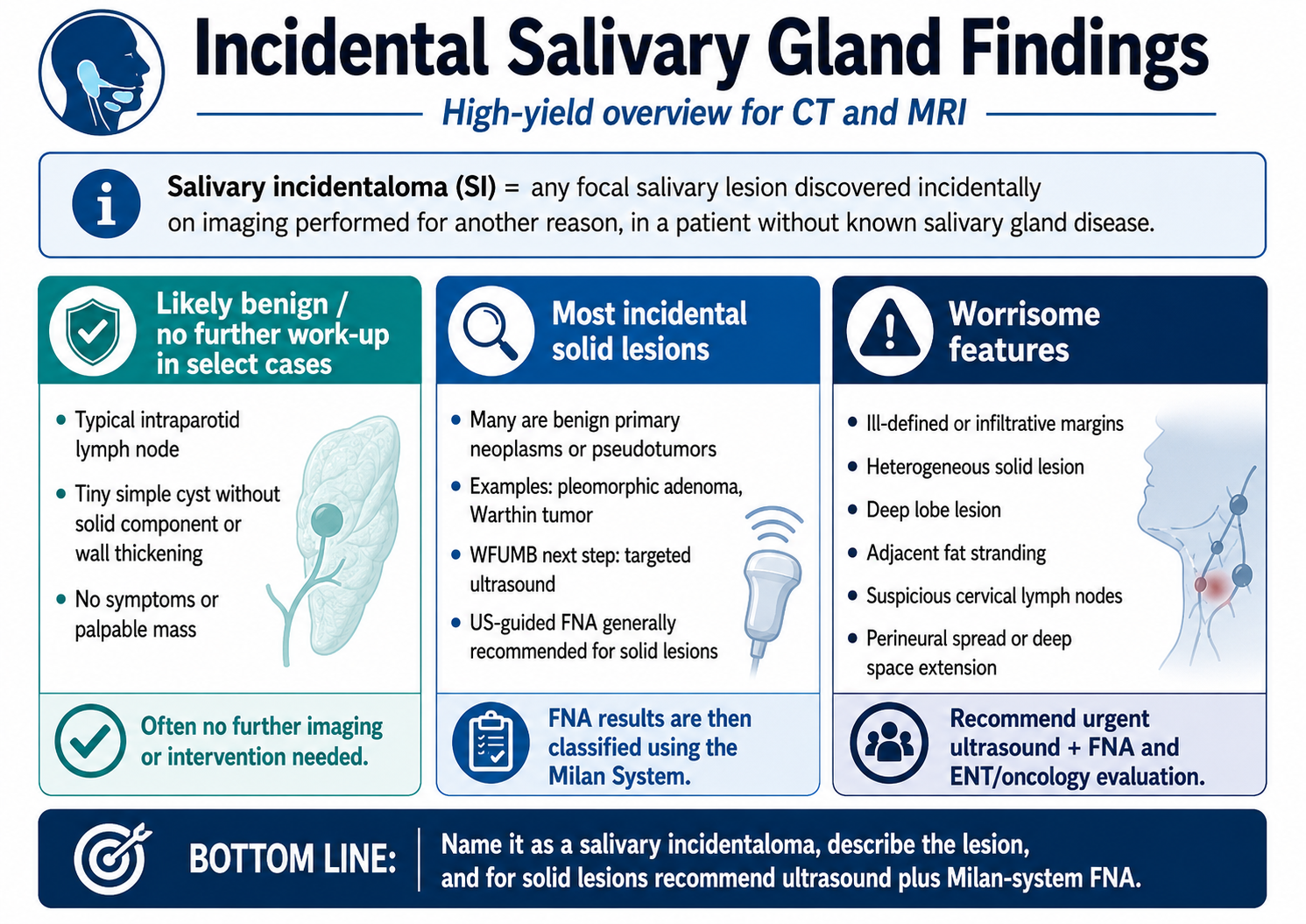
Salivary incidentaloma = focal salivary lesion found incidentally on imaging performed for another reason in a patient without known salivary gland disease.
Likely benign / no further work-up
- Typical small intraparotid lymph node with benign morphology.
- Tiny simple cyst without solid component or wall thickening.
- No symptoms, palpable mass, aggressive imaging feature, or suspicious cervical lymphadenopathy.
- Consider ultrasound only if clinically indicated.
Worrisome features
- Ill-defined or infiltrative margins, adjacent fat stranding, or deep space extension.
- Heterogeneous solid lesion, necrosis, perineural spread, or deep lobe lesion.
- Suspicious cervical lymph nodes or imaging findings concerning for malignancy.
WFUMB Approach
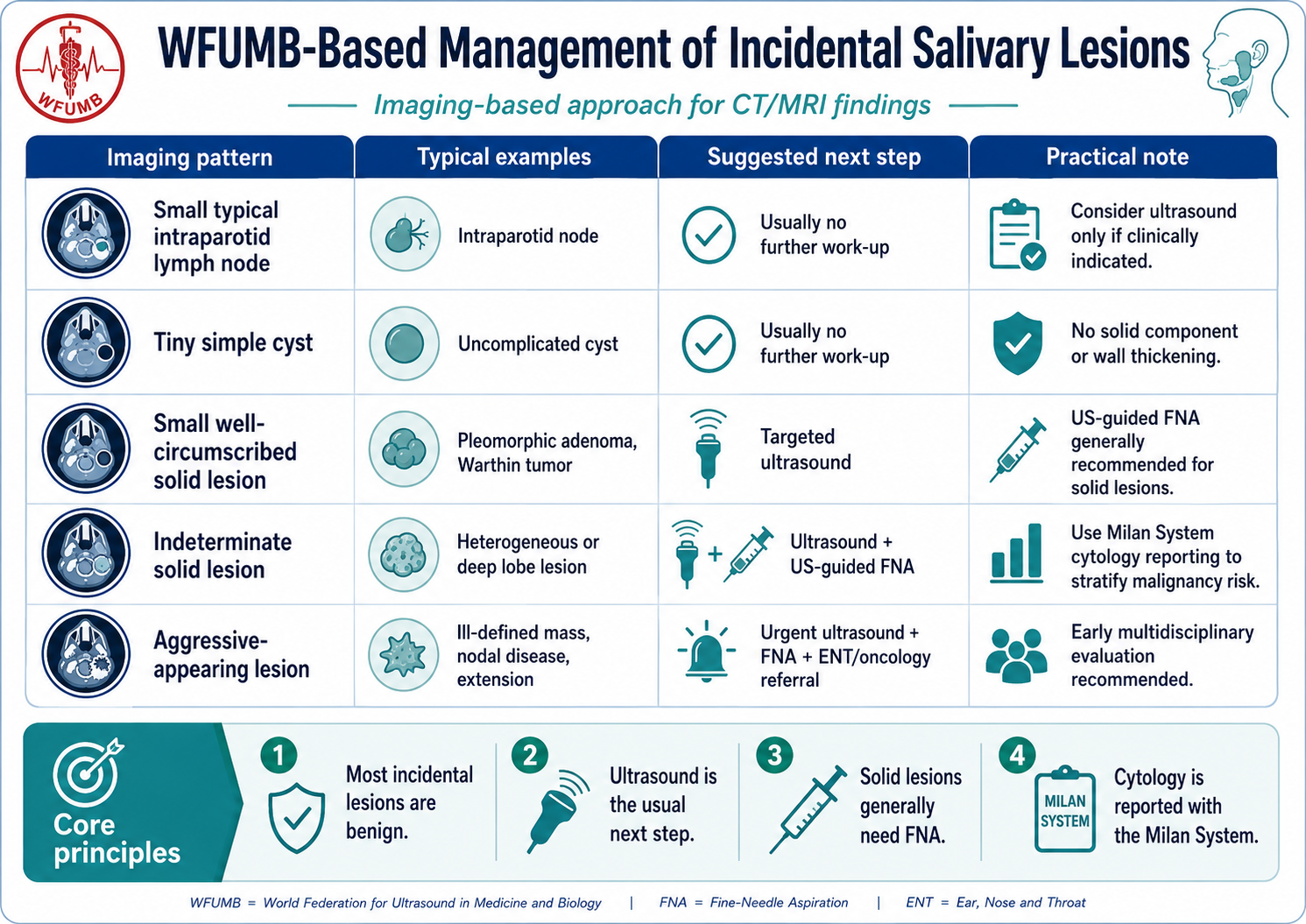
Suggested next step
- Small typical intraparotid lymph node: usually no further work-up.
- Tiny uncomplicated cyst: usually no further work-up.
- Small well-circumscribed solid lesion: targeted ultrasound.
- Indeterminate solid lesion: ultrasound plus US-guided FNA.
- Aggressive-appearing lesion: urgent ultrasound, FNA, and ENT/oncology referral.
Core principles
- Most incidental salivary lesions are benign primary neoplasms or pseudotumors.
- Ultrasound is the usual next imaging step for CT/MRI salivary incidentalomas.
- Solid lesions generally need US-guided FNA.
- FNA results are reported with the Milan System to stratify malignancy risk.
Milan / Reporting
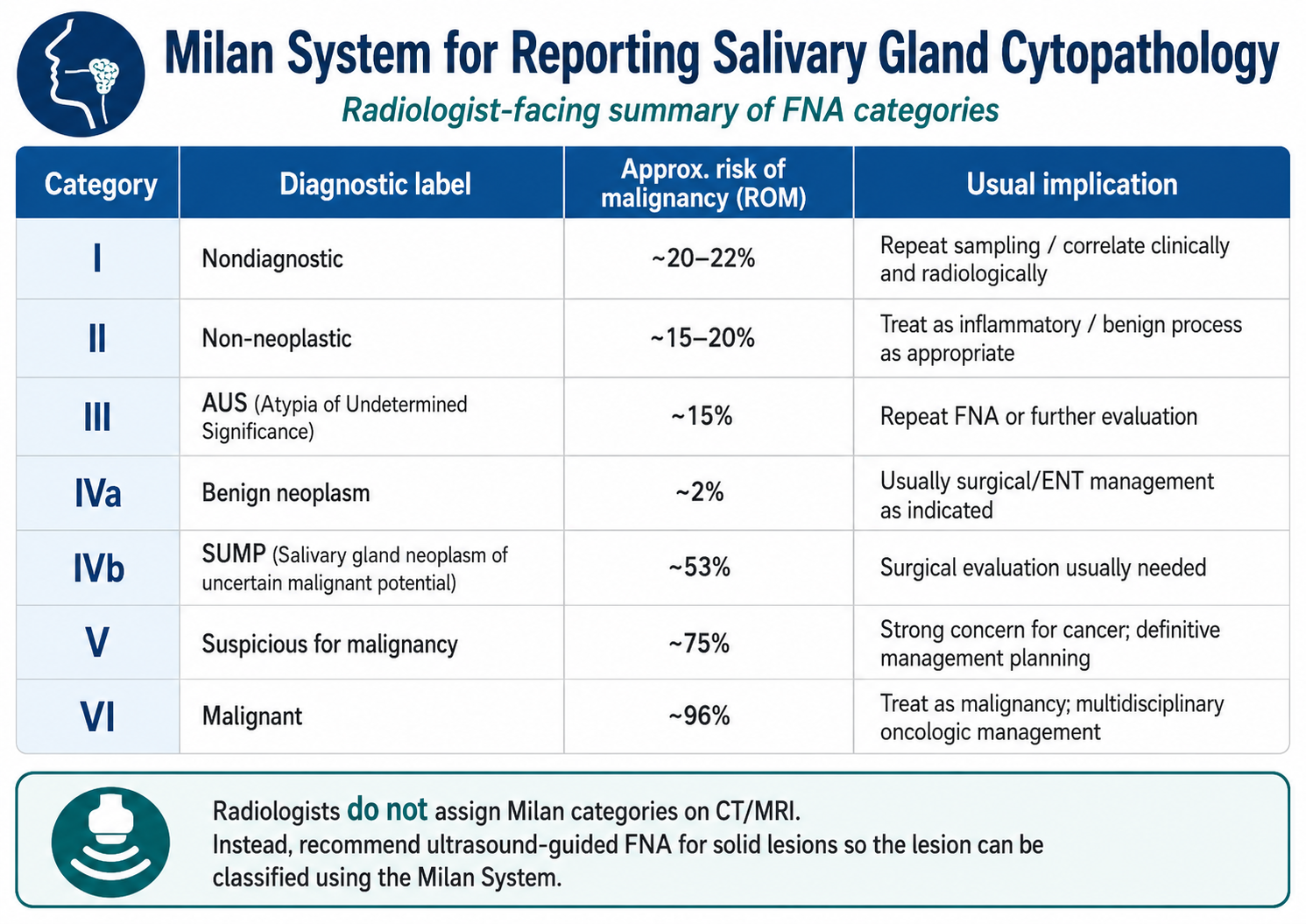
Milan system reminder
- Radiologists do not assign Milan categories on CT/MRI.
- Recommend US-guided FNA for solid lesions so cytology can assign a Milan category.
- High-yield categories: IVa benign neoplasm, IVb SUMP, V suspicious for malignancy, VI malignant.
- Risk of malignancy rises sharply from IVb through VI and guides ENT/surgical planning.
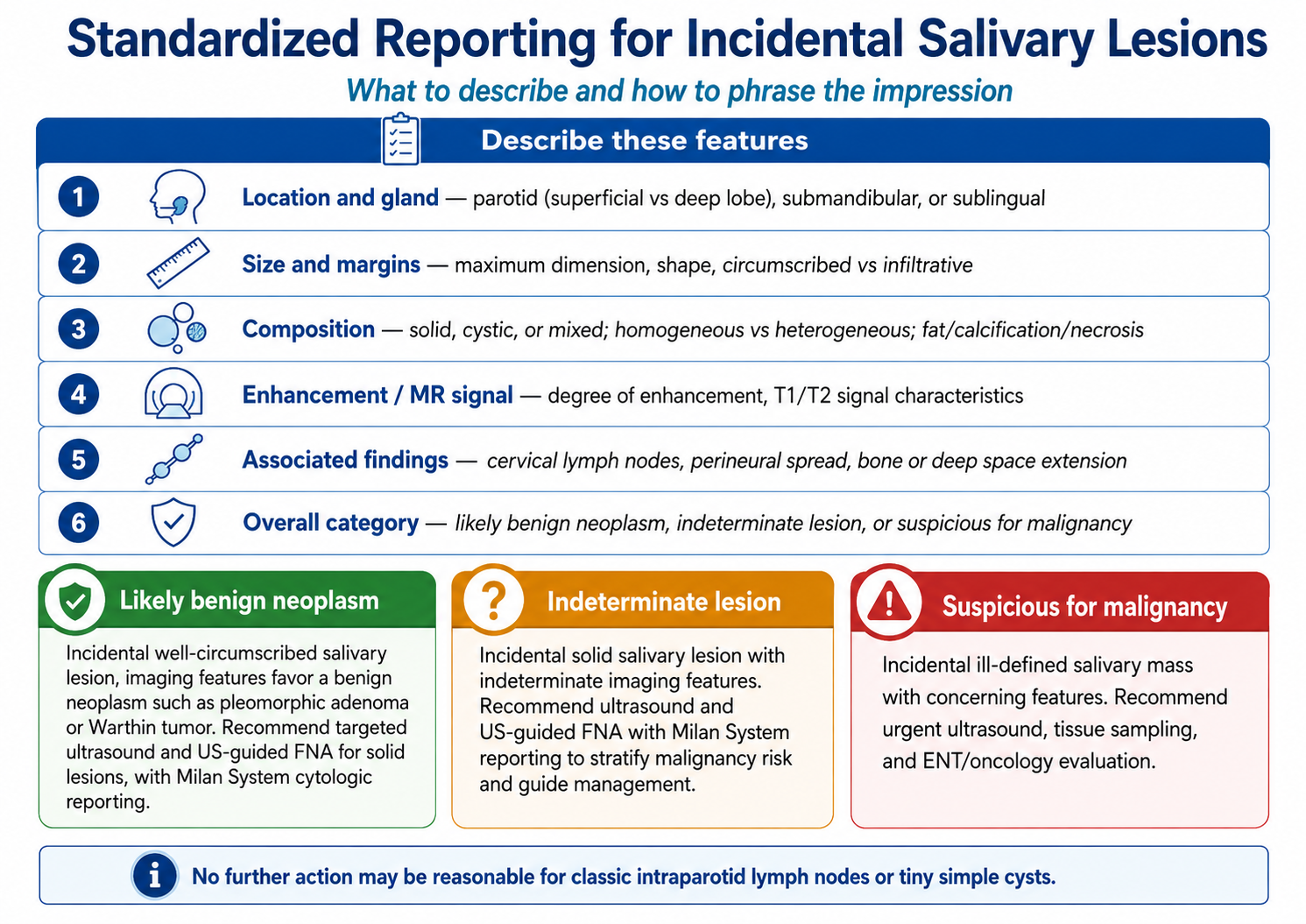
Report language
- Likely benign neoplasm: incidental well-circumscribed salivary lesion; recommend targeted ultrasound and US-guided FNA for solid lesion, with Milan System cytologic reporting.
- Indeterminate lesion: incidental solid salivary lesion with indeterminate imaging features; recommend ultrasound and US-guided FNA.
- Suspicious for malignancy: ill-defined salivary mass with concerning features; recommend urgent ultrasound, tissue sampling, and ENT/oncology evaluation.
- Classic intraparotid lymph node or tiny simple cyst: no further imaging or intervention may be reasonable.